Learning Korean is an exciting journey, but like any new language, it comes with its challenges. One of the most common challenges new learners face is pronunciation. Some Korean words can be tricky to pronounce, especially when certain sounds don’t exist in other languages, or they sound similar but are pronounced differently. Don’t worry though—mistakes are part of the learning process! In this blog, we’ll highlight some of the most mispronounced Korean words, why they’re tricky, and how you can improve your pronunciation with the help of Cake.

1. “외국인” (Oe-gook-in) – Foreigner
Why it’s tricky:
Many learners mistakenly pronounce the “외” (oe) as “we,” but the correct pronunciation is closer to “weh” with a short “e” sound. This can be tough because “외” doesn’t sound like any English vowel combination, making it easy to mispronounce.
How to improve:
To get the pronunciation just right, try repeating the word slowly: “weh-gook-in.” Focus on the “weh” sound, and don’t let it become a “we.” You can also listen to native speakers on apps like Cake, where the word is used in real-life contexts and pronunciations, so you can practice alongside it.
2. “이상” (I-sang) – Strange, or More Than
Why it’s tricky:
The “이” (i) sounds like “ee” in English, but the “상” (sang) can be mispronounced as “sung” or “song.” The “a” sound in “상” should be a short, clean “ah” sound, not a longer “aw.”
How to improve:
Start by breaking it down: “ee-sang” with a soft “a” sound like in “father.” Pay attention to how native speakers use this word in different contexts. On Cake, you can hear this word used in sentences, which will help you get the flow right.
3. “괜찮아요” (Gwaen-chanh-a-yo) – It’s Okay
Why it’s tricky:
The “괜” (gwaen) part of this word confuses many learners. It’s not pronounced like “guen” or “gwain,” but more like a smooth “gwaen.” The “ㅅ” (s) in “괜찮아요” is pronounced softly, not as a hard “sh” sound.
How to improve:
Focus on getting the “gwaen” right—“gwaen-chanh-a-yo.” The key is to avoid making the “ㅅ” sound too harsh. You can practice with Cake’s interactive speaking exercises, where you can get instant feedback on your pronunciation and work on getting it right.
4. “살” (Sal) – Age / Flesh
Why it’s tricky:
The word “살” (sal) means both “age” and “flesh,” but many learners end up pronouncing it like “sahl” (with a long “a” sound). In reality, the “a” in “살” is a short, sharp “a” sound, more like “sal” (as in “salad” without the “-ad”).
How to improve:
Practice saying it quickly but clearly: “sal” with a soft “a” sound. Listening to native speakers use the word in context, like in sentences on Cake, can really help train your ear to hear the subtle differences in pronunciation.
How Cake Can Help You Improve Your Korean Pronunciation
Cake offers a unique way to improve your Korean pronunciation with its interactive lessons and real-life content. With Cake’s AI-powered pronunciation feedback, you can practice speaking and get instant, personalized feedback on your pronunciation. The app helps you hear the correct sounds and gives you the chance to repeat them, making it easier for you to get your pronunciation right. Whether you’re a beginner or you’re trying to polish your skills, Cake’s content with real-life dialogues will help you pronounce words like a native speaker.
Common Mistakes Learners Make with Pronunciation
-
Overlooking Korean Vowels
Korean has more vowel sounds than English, and it’s easy to confuse them. Pay close attention to the way vowels like “ㅗ” (o) and “ㅜ” (u) are pronounced, as they can sound similar but are quite different. -
Forgetting Word Stress
Unlike English, where stress can change the meaning of a word, Korean is more about consistent syllable stress. However, beginners often stress the wrong part of a word, making it sound unnatural. Be mindful of syllable stress while practicing. -
Not Practicing Enough Speaking
It’s easy to get caught up in reading and writing Korean, but speaking is crucial. Practice speaking Korean out loud as much as possible, whether it’s repeating phrases from Cake’s lessons or speaking with a language partner.
Final Tips for Improving Your Korean Pronunciation
-
Practice with Native Content
Immerse yourself in native content—whether it’s K-drama, K-pop, or movies. Listening to real-life conversations helps you understand how words and phrases are naturally pronounced.
-
Use Technology
Use apps like Cake to practice your speaking. Get instant feedback and track your progress. The AI feature will make it easier for you to perfect tricky sounds.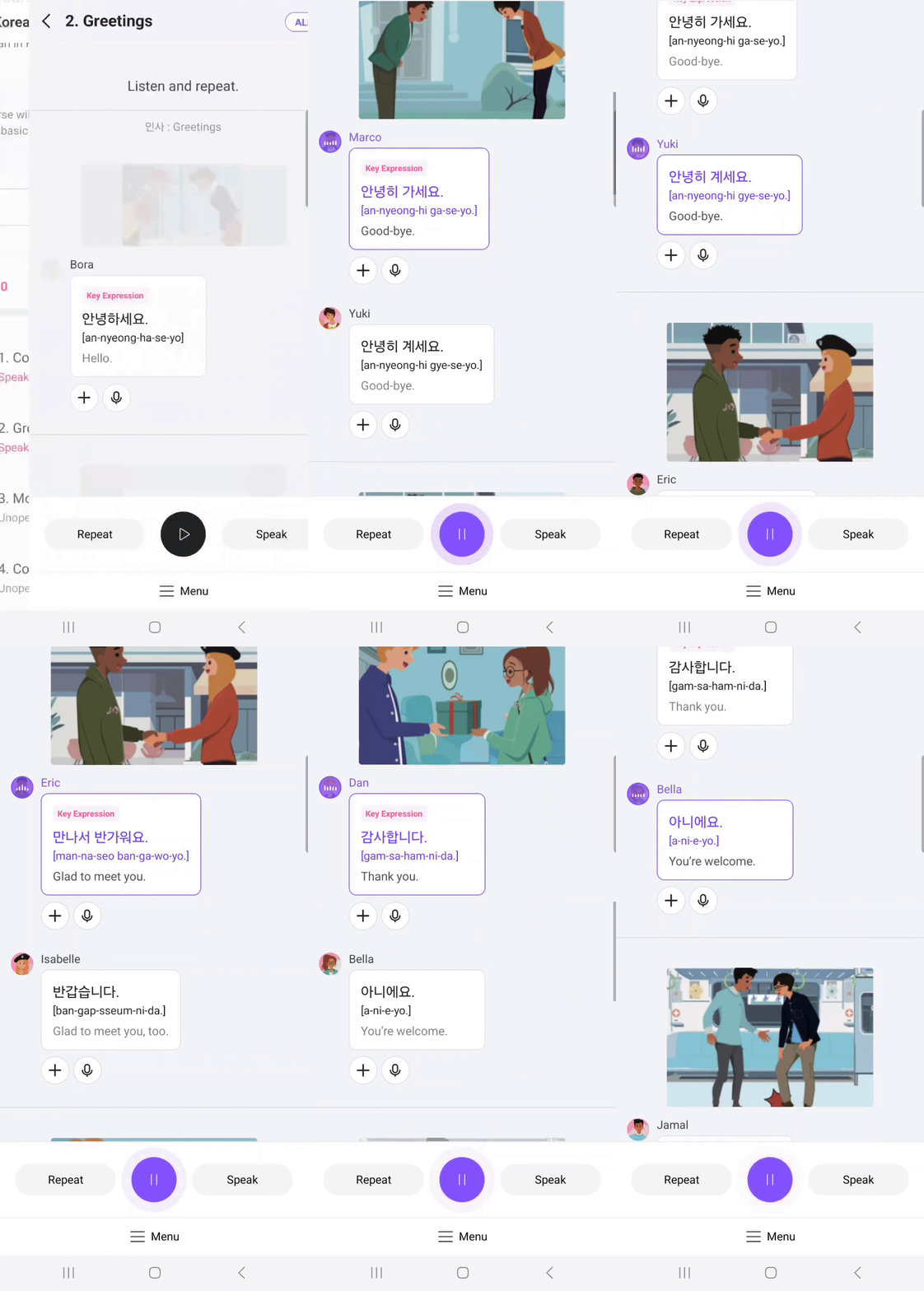
-
Don’t Be Afraid to Make Mistakes
Pronunciation is hard, and it takes time to master. Don’t be afraid to make mistakes, as they are an important part of the learning process. The more you practice, the more natural it will feel!
Mispronouncing words in Korean is common, especially when you’re just starting out, but with patience and the right practice, you can improve quickly. Start with basic sounds, be mindful of tricky words, and practice consistently. With Cake’s interactive lessons and real-life content, you can confidently work on your pronunciation and see great progress.
Download Cake today and start practicing with real-life Korean content to speak like a native!